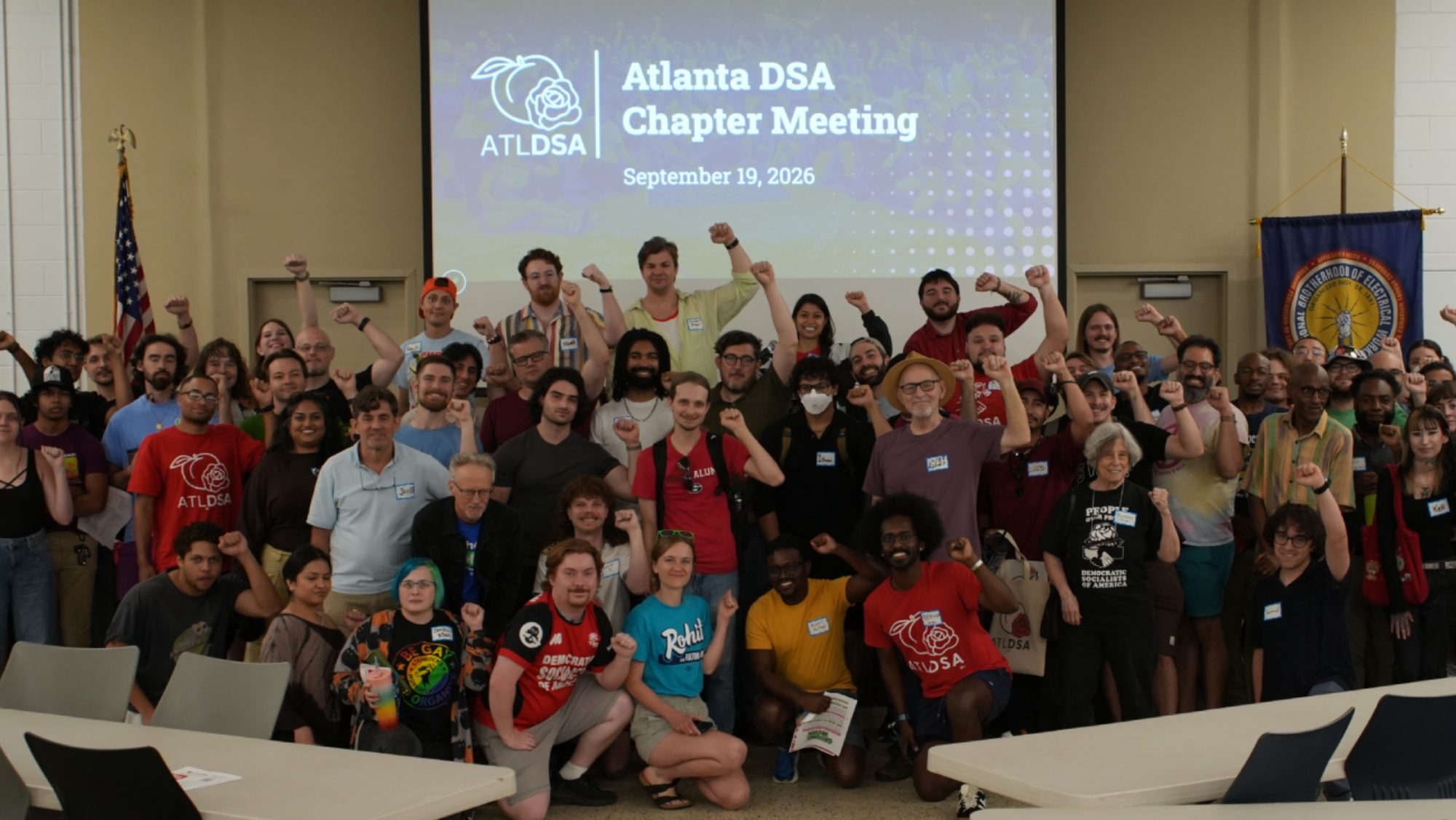
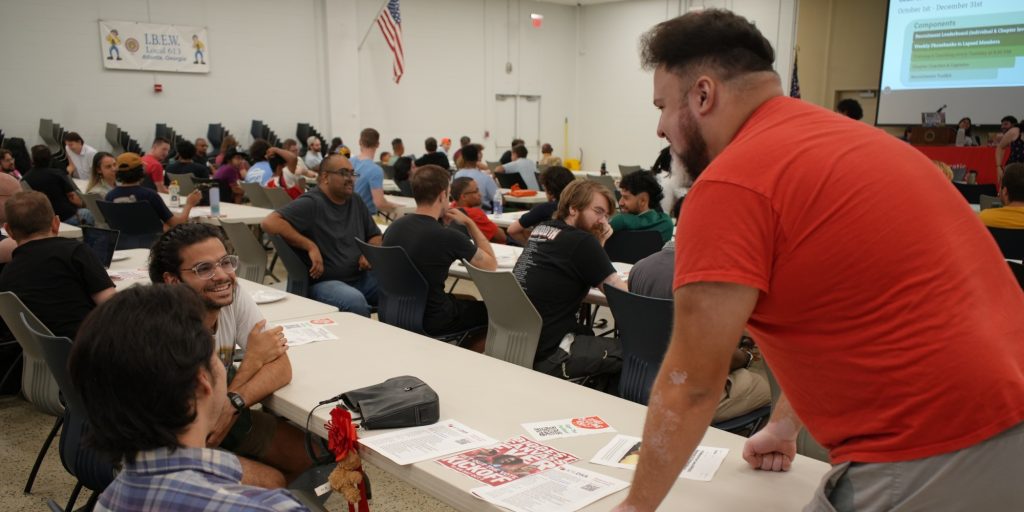
Atlanta DSA is a democratic, membership-based organization, which means that our members have the final say on our strategy and political direction. General Meetings are where members make decisions together. At least once per quarter, we hold all-member General Meetings as formal business meetings for members to hear reports from chapter officers and subgroups and to debate and vote on proposals in accordance with the democratic principle of one-member, one-vote. Upcoming dates, locations and agendas are posted on the chapter calendar and sent to members by email.
How debate works
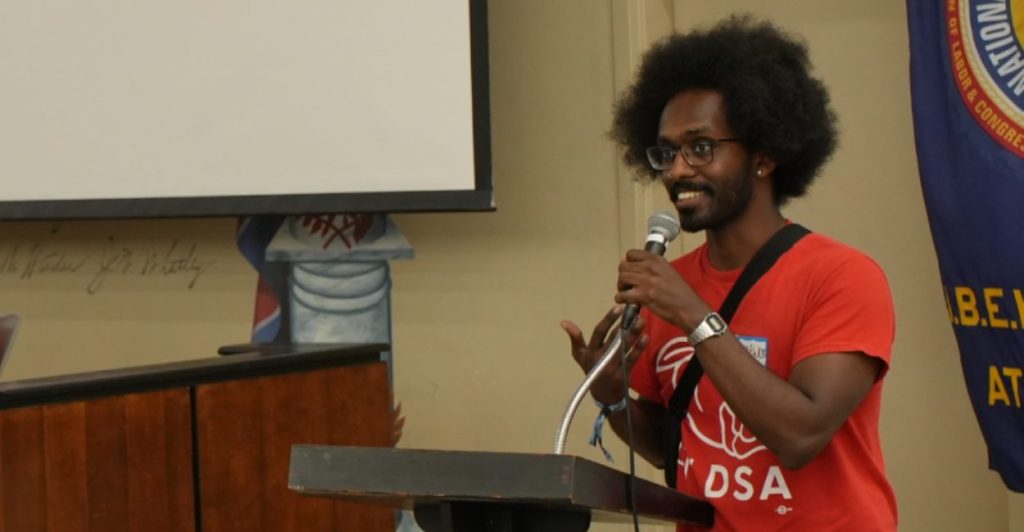
- Debate alternates between speakers for and against, with two speakers per side and up to two minutes per speech. The author’s opening explanation counts as the first speech in favor.
- All debate must be about the motion being discussed.
- The chair uses progressive stack, alternating speakers so that members of all backgrounds are fairly represented and so that all members get an opportunity to speak.
- If debate is extended, both sides get equal additional time.
- If you can’t attend, you can ask another member to read your written statement during debate.
- Atlanta DSA uses Robert’s Rules of Order, Newly Revised for parliamentary procedure.
How do proposals get to a General Meeting?
- Submission (4 weeks before). Members submit proposals to the Steering Committee using the submission form (available here on the member portal) at least four weeks before the meeting. The Steering Committee reviews each submission for compliance and lets the authors know about any problems that need fixing.
- Information session (2 weeks before). A virtual information session about pending proposals is held so members can ask questions, give feedback, and propose amendments.
- Secondary amendments (1 week before). Members may submit amendments to proposals between the information session and when the final member notice and agenda goes out.
- Member notice (1 week before). Every member gets an email with the full agenda, including all proposals and secondary amendments.
- Written statements (last week). From the member notice until the day of the meeting, members can submit written statements commenting on any item, including advocating a Yes or No vote. Statements are posted on the member bulletin and shared with all members.
- Debate and vote. Members debate the pros and cons of proposals at the General Meeting. Elections and endorsements go to an all-member electronic vote at the end of the meeting. Proposals are voted on in-person at the meeting, unless members take action through a motion or petition to refer them to an electronic vote.
Frequently Asked Questions (FAQ)
Who can attend and vote?
All Atlanta DSA members in good standing can attend, speak, and vote. People interested in joining DSA are welcome, but observers should request permission to attend ahead of time by emailing the Steering Committee at steering(at)atldsa.org.
Not sure your dues are current? Check your membership status here.
Are meetings recorded?
Yes, meetings are recorded and shared with members. To protect members’ privacy, attendees may not film, photograph, or record meetings without permission from the Steering Committee. Assume that anything said during deliberation may become public.
Where can I read the proposals?
On the member bulletin website. Every member can make an account and log in. Login help here.
Can I attend remotely?
Meetings are held either fully in person or fully online, and in-person meetings are livestreamed for members to observe. If you can’t attend an in-person meeting, you can register a proxy vote to have another member vote on your behalf.
How does proxy voting work?
Members can sign up to give their vote to another member to act as their proxy for a specific meeting. Members can only proxy vote for one other member at a time.
What is quorum?
Quorum is the minimum number of members needed to make decisions: 5% of all members.
How many votes does it take to pass something?
Most resolutions need a simple majority. Bylaw amendments and electoral endorsements need a two-thirds vote. Procedural motions may have different thresholds depending on what the motion is.